Conditions
Psoriasis: diagnosis and treatment in San Pedro and Monterrey
Psoriasis is a chronic inflammatory skin disease. It is not contagious and, although there is no definitive cure, today there are treatments that control it very well.
Every treatment is prescribed after a medical assessment.
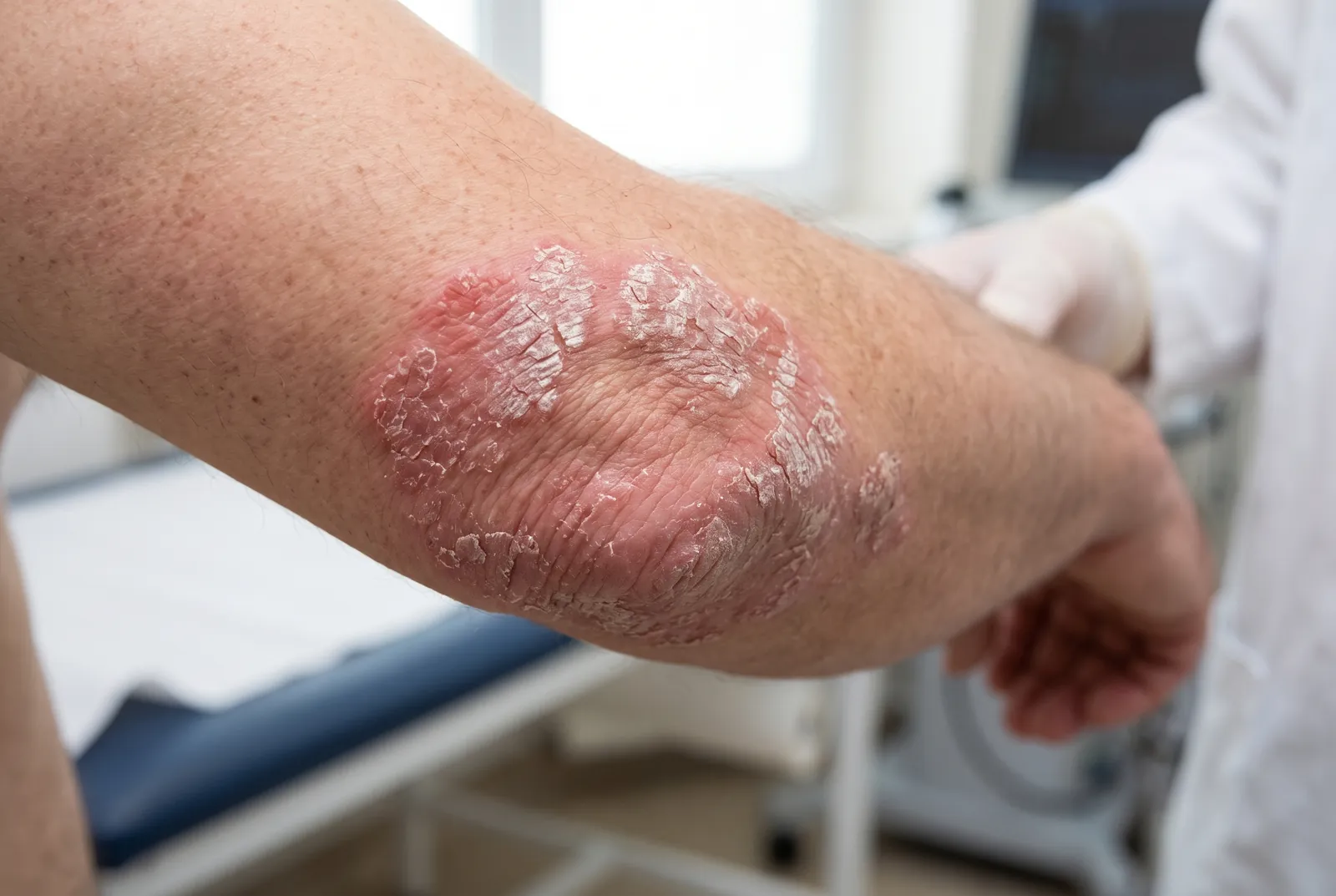
How does it show up?
Skin
Red, thickened plaques covered with whitish scales, often on the elbows, knees and lower back. They can itch.
Scalp
Flaking and plaques that can be mistaken for dandruff or seborrheic dermatitis.
Nails
Small pits on the surface and separation of the nail from its bed; it can look like a fungal infection.
Joints
In some people it comes with joint pain and swelling, which should be assessed early.
What makes it worse?
- Stress
- Infections
- Scratching and skin injuries
- Some medications
- Tobacco and alcohol
How Dr. Cortés treats it
Treatment depends on how widespread it is and which areas are affected, and it is adjusted to each stage of the disease:
Topical treatment
Anti-inflammatory creams and lotions, such as corticosteroids of the right strength used under supervision, and other active ingredients that reduce plaques and flaking.
Scalp and nails
Shampoos, solutions and specific treatments for these areas.
Extensive cases
When psoriasis is widespread or doesn't respond, there are systemic treatments that the dermatologist assesses case by case.
Don't self-medicate with cortisone creams: used without supervision they can thin the skin and cause a rebound flare when stopped.
Frequently asked questions
What patients ask us most about psoriasis
Is psoriasis contagious?
No. Psoriasis is not spread by contact, by sharing objects or by swimming in the same pool.
Can psoriasis be cured?
It is a chronic disease with no definitive cure, but today there are very effective treatments to control it and achieve long periods of clear or almost clear skin.
What makes psoriasis worse?
Stress, infections, cold, alcohol, tobacco, some medications, and bumps or scrapes on the skin.
Does psoriasis only affect the skin?
It can also affect the scalp, the nails and, in some people, the joints. That is why medical follow-up is important.