Specialized training
Dr. Cristina Cortés holds a Master's degree in Trichology and Hair Transplantation from the University of Alcalá (Spain) and the Pedro Jaén group.
The most common causes
Androgenetic alopecia
In men and women: progressive thinning of the hair due to hormonal and genetic factors.
Telogen effluvium
Diffuse, heavy shedding, often after an event that affects the whole body.
Alopecia areata
Hair loss in round patches.
We also treat lichen planopilaris, frontal fibrosing alopecia, psoriasis and seborrheic dermatitis of the scalp, and trichotillomania.
How it is diagnosed
The most common causes are diagnosed through examination and trichoscopy, a magnified study that shows the hair and scalp in detail. Other types of alopecia may require further tests, such as a scalp biopsy.
How Dr. Cortés treats it
Treatment depends on the cause and may combine:
Oral medication
Depending on the diagnosis and the cause of the hair loss.
Topical treatments
Solutions, sprays or foams applied to the affected area.
Hair care routine
Shampoos and hair products specific to your case.
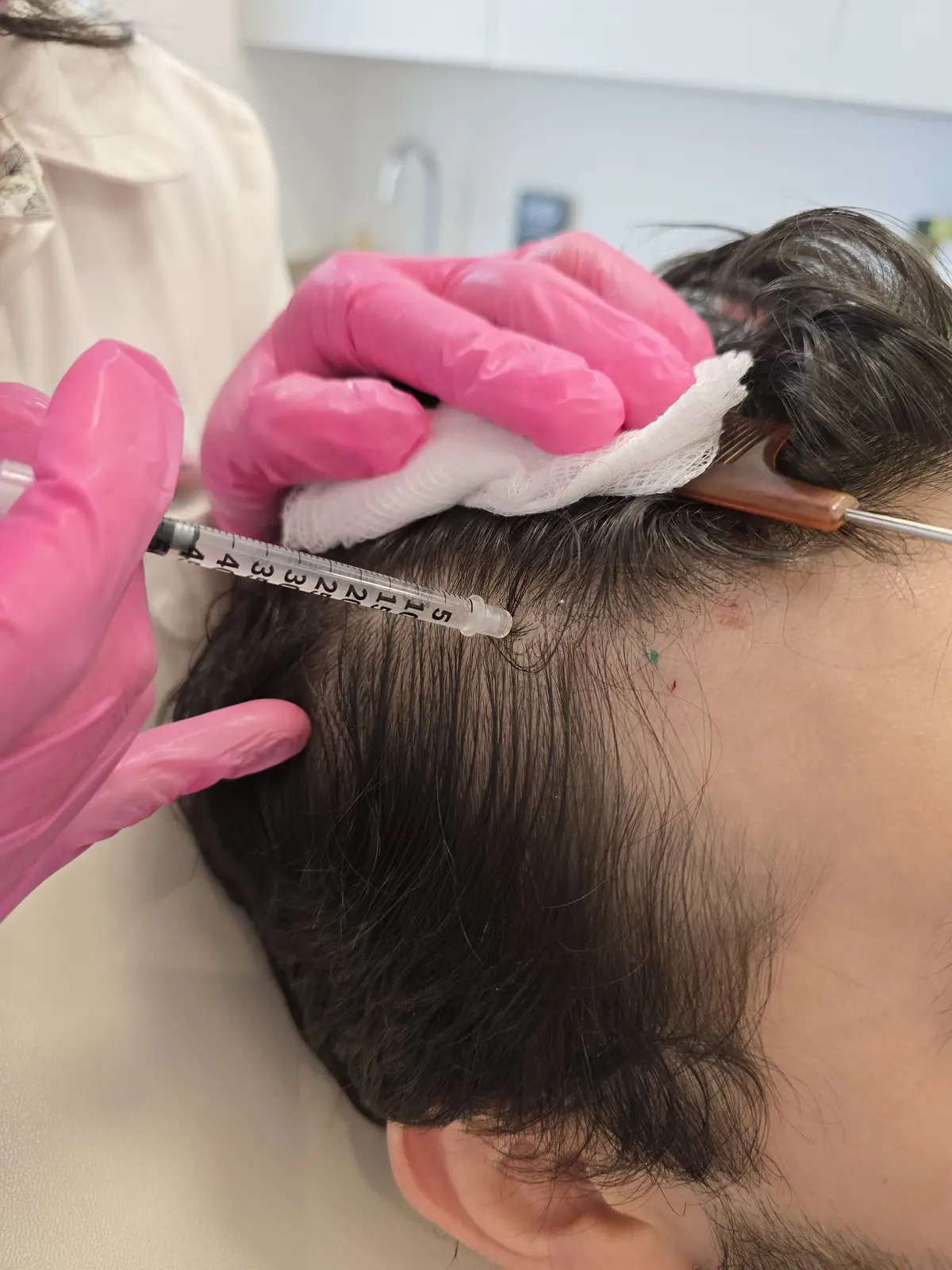
Scalp mesotherapy
Injection of active ingredients into the scalp to boost the treatment.
Platelet-rich plasma
Especially useful in androgenetic alopecia.
Microneedling
A less invasive alternative to mesotherapy to stimulate growth.
Hair transplant
Indicated both for small localized areas of alopecia and for more advanced alopecia, after an assessment in consultation.
The sooner the cause is identified, the better the results: many types of alopecia respond better when treated in their early stages.
Frequently asked questions
What patients ask us most about hair loss
Is it normal to lose hair?
Yes, losing between 50 and 100 hairs a day is normal. It is worth seeing a doctor if you notice heavier shedding for several weeks, if your hair looks thinner or if bald patches appear.
Can stress cause hair loss?
Yes. Significant stress, an illness, surgery, childbirth or a strict diet can trigger diffuse shedding a few months later. It usually recovers, but other causes should be ruled out.
Can hair loss be treated?
Yes. Treatment depends on the cause, so the first step is a diagnosis with a scalp examination and, if needed, lab tests.
How soon will I see results?
Hair grows slowly: the first changes are usually noticeable after about three months, and full improvement can take longer. Consistency is important.
Can women have pattern hair loss too?
Yes. Female pattern hair loss is common and usually shows as thinning on the top of the head. It can be treated and is best addressed early.